We use cookies and similar technologies to support the functionality and security of our website, understand website usage, and evaluate the effectiveness of our outreach and marketing efforts. We use analytics by default to understand how visitors use the site. Pages about specific conditions or substances are not named in that data. Advertising and other optional tools stay off until you choose. You can turn analytics off at any time with Reject All or Cookie Preferences. See our Privacy Notice.
Read full cookie notice
These technologies may collect information such as your IP address, browser and device information, pages visited, and interactions with our website. We may use third-party analytics and advertising services to help us understand website traffic and measure advertising performance.
Because we provide behavioral health services, we take privacy seriously. We do not intend to use this website to collect or disclose information about an individual's health or treatment needs through advertising technologies. We take steps to manage tracking technologies in accordance with applicable privacy requirements.
You can change your choice at any time from "Cookie Preferences" at the bottom of every page. California residents may have additional privacy rights, including the right to opt out of the sale or sharing of personal information. If your browser sends a Global Privacy Control signal, we treat it as that opt-out.
We detected a Global Privacy Control signal from your browser, so advertising cookies stay off.
The Alta Mira residential substance use disorder treatment programs were designed by renowned specialists who are among the best in their respective fields.
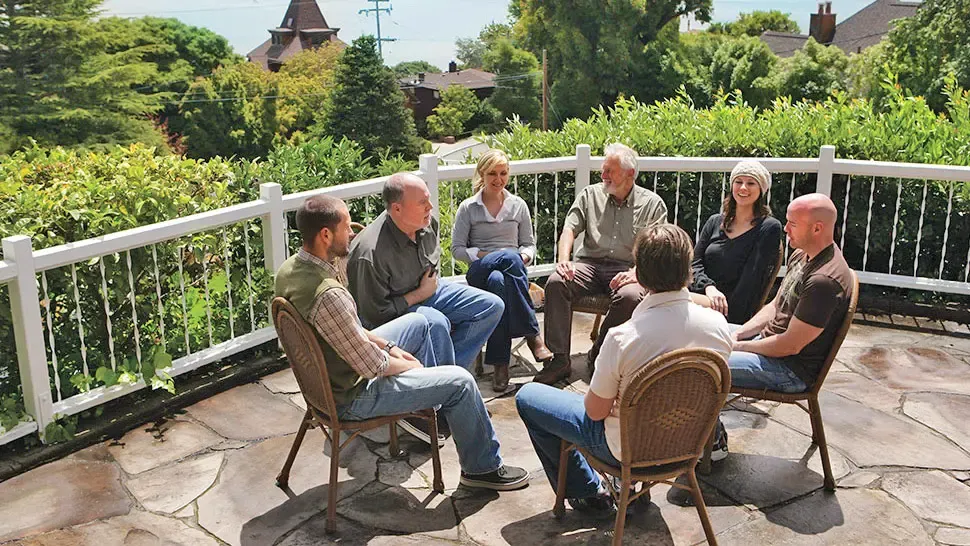
Support groups are one of the keys to successful recovery from drug addiction, and active involvement in support groups can improve your chances of attaining sobriety and staying sober long-term. Participation in support groups involves heartfelt sharing between members about their experiences and about what strategies work for living a contented, sober life.
Recovery from drug addiction doesn’t happen overnight. You may need medically-supervised detox and rehabilitation in a treatment facility in order to stop the compulsion to continually turn to mind-altering substances to escape from or cope with the challenges of your life. Recovery continues even after you’ve completed an inpatient treatment program.
Once you are able to stop using drugs, you are not “cured.” Long-term support will be needed on an ongoing basis, and there are several different options of support groups for recovery from drug addiction. The important thing is to find one that you are comfortable with and make a commitment to participating in your group as part of your long-term recovery.
How and Why Support Groups Work
When you participate in a support group, you may find that it’s the first time you feel a sense of connecting with other people who truly understand what you have been going through. In a supportive and nonjudgmental environment, you are free to share your own experiences while learning what has worked for other people in similar circumstances.
Participating in support groups can reduce any sense of isolation you have been experiencing, and it allows you to witness the progress and growth in the people around you. Other members of your support group may offer encouragement as you progress, and they might also point out things you are doing that may be setting you up for a relapse.
Different people respond to different types of support groups. Groups may be based on a self-help philosophy or peer support. If you find that one type of support group doesn’t work for you, keep looking until you find one that does.
12-Step Programs
Twelve-step programs are probably the most well-known support groups for recovery from alcoholism and drug addiction. The principles of 12-step programs are so effective that they are used to recover not only from drug addiction but also from a number of other compulsive behaviors such as gambling or overeating.
The heart of 12-step programs is an admission of powerlessness. This is followed by turning to a power greater than yourself for help. While some people interpret this in a religious way, others consider the group itself to be a higher power.
Some 12-step groups that are focused on recovery from drug addiction include:
Alcoholics Anonymous – the original 12-step program, which aims to offer a fellowship to support anyone who has the desire to stop drinking
Narcotics Anonymous – a fellowship of people who are striving for complete abstinence from drugs
Cocaine Anonymous – a fellowship for those who wish to stop using cocaine and all other mind-altering chemicals
If you are looking for an alternative to 12-step programs, there are several to choose from. Examples include:
SMART Recovery. An abstinence-based program that provides tools to help individuals change defeating thoughts in order to recover from addiction
Secular Organizations for Sobriety. Uses rational thought and encourages individuals to take responsibility for their recovery
Women for Sobriety. Aims to empower women to change their thought processes as they grow emotionally and spiritually and recover from addiction
These organizations offer an alternative way to approach your long-term recovery while still providing the fellowship and support of others who are in recovery from drug addiction.
Getting Started on the Road to Recovery
If you are physically and psychologically dependent on substances, residential treatment may be the best option for getting started on the road to recovery. In a treatment facility, you can receive medical supervision as you withdraw from the substance or substances you have been using.
Integrated drug addiction treatment is very effective, especially if you have any co-occurring disorders. It’s a structured and safe environment in which to lay a foundation for successfully learning to live a drug-free life. Treatment also includes long-term follow-up to help prevent relapse. Finding a support group that works for you will be an important part of your long-term recovery.