

Tusi (“pink cocaine”) withdrawal symptoms depend on what is in the batch. Because tusi is usually a mixture built around ketamine and MDMA, most people experience cravings, anxiety, insomnia, and low mood that can begin within hours and last for weeks.
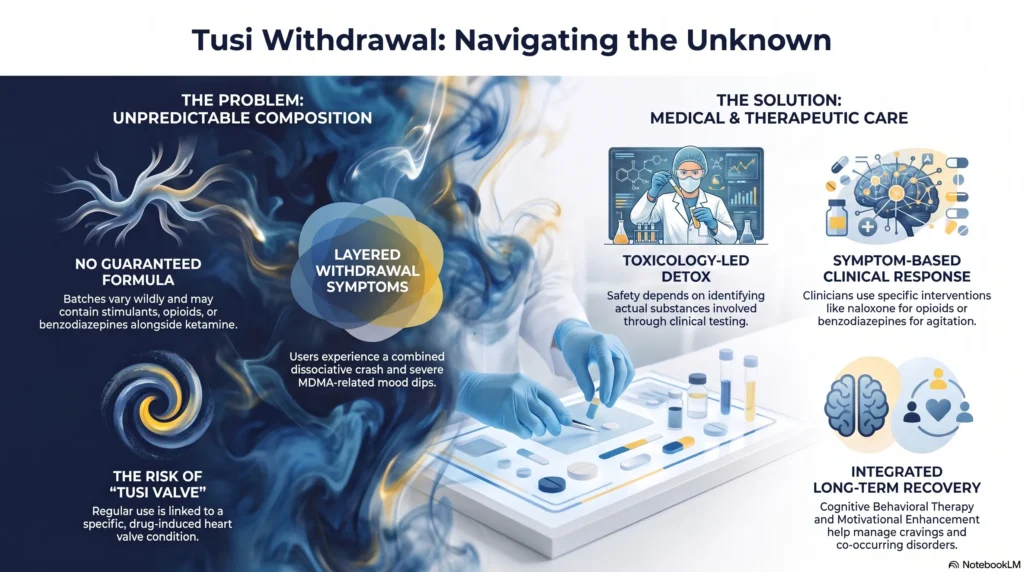
A 2026 study also linked regular tusi use to a newly identified heart condition called “tusi valve,” a reminder that medical supervision matters when stopping use [5].
Tusi is not a standardized drug. Most samples are built around ketamine and 3,4-Methylenedioxymethamphetamine (MDMA), often cut with caffeine, though testing has also turned up methamphetamine, cocaine, synthetic cathinones, and even prescription opioids in the same pink powder [1].
Tusi is not only a New York or Miami nightlife trend. In early 2024, San Jose police arrested a South Bay business owner accused of manufacturing and selling tusi out of a local shop, and a sample sold in Sacramento as 2C-B tested positive for the same caffeine, ketamine, and MDMA combination found in tusi elsewhere in the country [2].
Because the mixture varies by batch, withdrawal is not one syndrome. A person coming off tusi may be managing a ketamine-related crash, an MDMA-related mood dip, a stimulant comedown, or, if the batch contained an opioid or a benzodiazepine, a withdrawal process from that substance as well [6].
This unpredictability is also why clinicians treat tusi withdrawal by symptom rather than by assumption, since toxicology testing is often the only way to know what a person actually took [6].
Withdrawal symptoms depend heavily on which components dominate a given batch. In a 2025 survey of people with ketamine use disorder, the most commonly reported symptoms during abstinence included:
When MDMA is the dominant ingredient, a separate and well-documented pattern also emerges: a measurable, multi-day drop in mental well-being, sometimes called the “midweek low,” that remains even after researchers rule out lost sleep and other drug use as the explanation [4].
Agitation, seizures, or psychosis can also occur if the batch contains stimulants, opioids, or benzodiazepines, particularly with heavy or frequent use [6].

Because tusi combines a fast-acting dissociative with a slower-clearing stimulant, its withdrawal pattern is layered. The timeline below reflects the pattern most often described in the ketamine and MDMA withdrawal literature, though individual experience varies with the batch and the frequency of use [3][4].
| Phase | Timing | What Happens |
|---|---|---|
| Early crash | Under 24 hours | Fatigue, low mood, and muscle tension as MDMA’s stimulant effects wear off |
| Peak intensity | 1–3 days | Cravings, irritability, anxiety, and sleep disruption; agitation is possible with stimulant- or opioid-containing batches |
| Subacute phase | Days 3–14 | Persistent low mood, poor concentration, and continued cravings |
| Extended recovery | Weeks 3+ | Gradual improvement, though mood and sleep changes can linger in heavy or long-term users |
There is no single, agreed-upon protocol for tusi withdrawal, largely because no two batches are guaranteed to contain the same substances [1][6]. Medical detox typically starts with toxicology testing to identify what is actually involved, rather than relying on the drug’s street name [6].
From there, treatment follows the symptoms in front of the clinician. Naloxone is kept available in case a batch contains opioids; benzodiazepines may be used for agitation or seizures; supportive care — such as intravenous fluids and cooling — addresses dehydration and hyperthermia [6].
Cardiac monitoring is also worth raising with a provider. A 2026 case series described a new drug-induced heart valve condition, called “tusi valve,” in people with regular tusi use [5].
Once a person is medically stable, therapies such as Cognitive Behavioral Therapy (CBT) and Motivational Enhancement help address cravings and the patterns of use that led to dependence.
Detox addresses the acute crisis, not the underlying dependence. In the same 2025 survey, only 41% of respondents with ketamine use disorder had ever sought treatment, and most who did needed more than one attempt before it worked [3].
Persistent cravings, low mood, and sleep problems are common relapse triggers well after the acute withdrawal period ends, so ongoing care matters as much as the initial detox [3].
Therapeutic approaches such as Cognitive Behavioral Therapy (CBT), Motivational Enhancement, and peer support programs help address both the physical and psychological sides of tusi dependence, along with any co-occurring anxiety or depression.
For those seeking this level of specialized, integrated care in the San Francisco Bay area, Alta Mira Recovery Programs is a high-end, top-tier residential addiction center specializing in the treatment of substance use disorders and complex co-occurring mental health issues.
Our team of addiction treatment professionals provides sophisticated clinical care and diagnostic services, reflecting our appreciation for your unique qualities.
[1] Fitzgerald, N. D., et al. 2025. When Pink Powders Shift the Drug Landscape: Tusi (“Pink Cocaine”) and Other Colored Powders. International Journal of Drug Policy, 146, Article 105044.
[2] CBS News San Francisco (KPIX). 2024, Feb. 8. South San Jose Donut Shop Owner Accused of Making, Selling “Pink Cocaine”.
[3] Harding, R. E., et al. 2025. The Landscape of Ketamine Use Disorder. Addiction, 120(10), 1970–1979.
[4] Blankers, M., et al. 2025. Three-Day Blues after Ecstasy/MDMA Use. Drug and Alcohol Dependence, 276, Article 112881.
[5] Vasquez-Rodriguez, J. F., et al. 2026. TUSI Valve: Echocardiographic and Pathologic Correlates. CASE, 10(4), 136–142.
[6] Gaetani, S., and Aldy, K. 2025. A Stimulant on the Rise: “Pink Cocaine”. The ToxIC NOSE (Novel Opioid and Stimulant Exposure) Report #20. American College of Medical Toxicology.
